 admin
admin How to Care for Calathea Ornata in Office Cubicles with AC: Humidity Tips
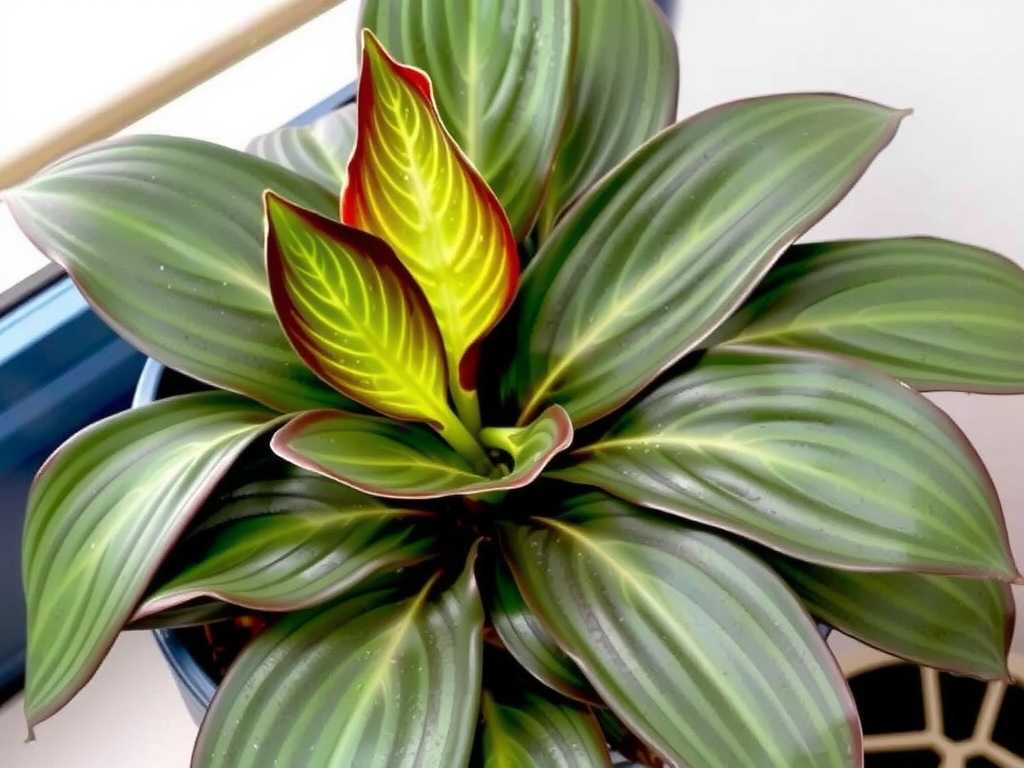
You’ve brought a stunning Calathea Ornata into your office cubicle, lured by its gorgeous pink-striped leaves. But within days, you notice the edges turning brown and crispy. The leaves curl inward, losing their vibrant prayer-like movement. You’re not a neglectful plant parent—you water it, give it indirect light. So what’s going wrong? The culprit is almost certainly the relentless, dry air blowing from your office’s air conditioning system. As a fellow plant enthusiast who has battled this exact scenario, I understand the frustration. Our beloved Calatheas are tropical understory plants that crave consistent warmth and, most critically, high humidity—conditions that are the complete opposite of a typical air-conditioned office. In this guide, I’ll share the exact, practical steps I took to transform my struggling Calathea Ornata into a thriving, resilient office companion, focusing specifically on winning the humidity war.
Understanding the Enemy: Why AC is a Calathea’s Nemesis
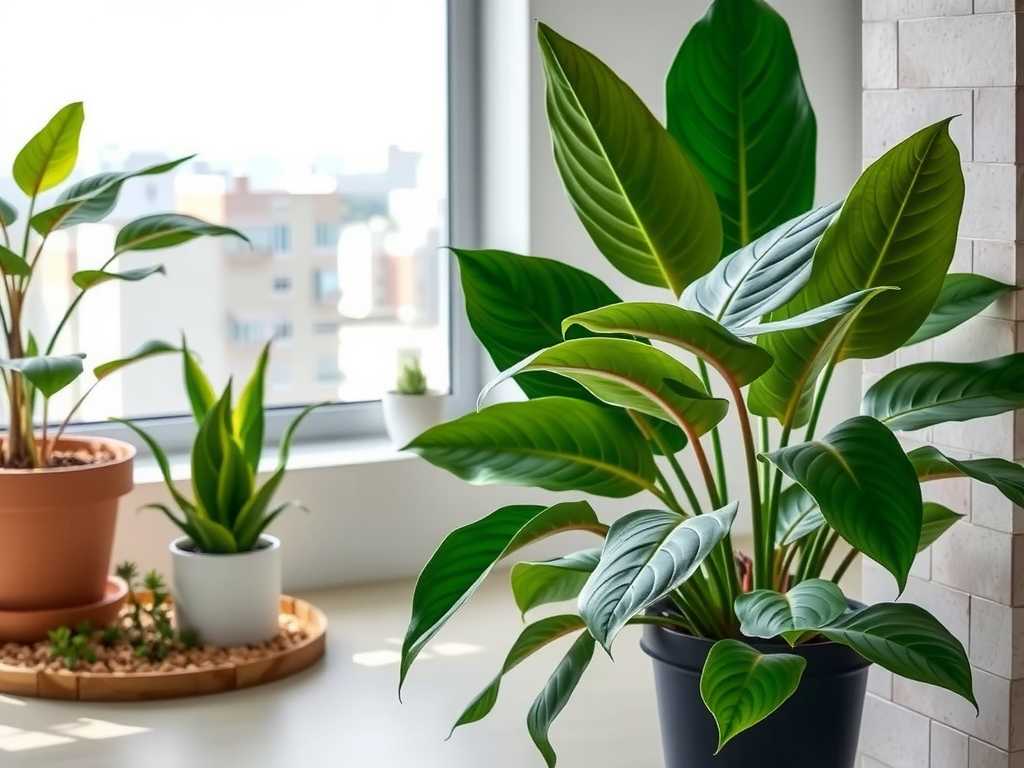
Before we fix the problem, let’s understand it. Air conditioning doesn’t just cool the air; it dehumidifies it. Most office AC systems are designed to maintain a relative humidity (RH) level between 30% and 50%. According to the Royal Horticultural Society (RHS), Calathea species, including the Ornata, thrive best in humidity levels of 60% or higher. In my cubicle, a simple digital hygrometer revealed a shocking truth: the RH hovered around a desert-like 35% when the AC was running. This massive gap explains the browning leaf tips—a classic sign of moisture stress where the plant loses water faster than its roots can absorb it.
My 2-Week Humidity Rescue Mission: A Step-by-Step Log
I decided to conduct a focused, two-week experiment to save my Calathea Ornata. I documented every step, every observation, and every mistake.
Week 1: Foundation and Immediate Interventions
My goal for the first week was to implement baseline strategies and monitor the plant’s initial response.
Step 1: The Essential Diagnosis – Getting a Hygrometer You cannot manage what you do not measure. My first purchase was a small, discreet digital hygrometer. Placing it next to my plant confirmed my fears: 35% RH. This became my key performance indicator.
Step 2: Creating a Microclimate with the Pebble Tray Method This is the most recommended and low-tech solution. I filled a shallow tray with pebbles, added water until it was just below the top of the stones, and placed my Calathea’s pot on top. The idea is that evaporating water increases humidity immediately around the plant.
- The Mistake I Made: I initially placed the pot directly in the water, risking root rot. Always ensure the pot sits above the water line.
- Observation After 3 Days: The hygrometer showed a modest increase to about 42% directly above the tray. The existing brown tips didn’t heal (they never will), but I saw no new browning. The leaves seemed slightly less curled in the morning. This was a small but encouraging sign.
Step 3: Strategic Grouping I moved my Calathea to sit beside my other office plant, a peace lily. Plants release moisture through transpiration, and grouping them together creates a shared, more humid microclimate.
- Observation After 5 Days: Combined with the pebble tray, the local RH now read 48%. The Calathea’s newest, unfurling leaf looked healthy and showed no signs of crisping.
Week 2: Advanced Tactics and Fine-Tuning
The baseline methods helped stabilize the plant, but I wanted to push the humidity closer to the ideal 60% without turning my cubicle into a sauna.
Step 4: Introducing Targeted Misting – With Caution I invested in a fine-mist spray bottle. Every morning, before the AC reached its peak, I would give the leaves a light mist, focusing on the air around the plant rather than drenching the foliage. The American Horticultural Society (AHS) notes that misting provides only a temporary humidity boost, but when done consistently and correctly, it can help during critical dry periods.
- The Mistake I Made: I over-misted in the evening, leaving water droplets to sit on the leaves overnight. This can invite fungal diseases. Always mist in the morning so water evaporates during the day.
- Observation After 10 Days: Morning misting gave a quick 15% RH boost that slowly dissipated over two hours. The plant’s prayer movement became more pronounced—a key indicator of good health and hydration.
Step 5: The Game-Changer: A Personal Desktop Humidifier For the final push, I introduced a small, quiet ultrasonic humidifier. I placed it about a foot away from my plant grouping, set it to a low, continuous mist, and aimed it away from my computer and papers.
- The Immediate Effect: Within an hour, my hygrometer steadily climbed and stabilized at 58-62% RH. This was the target zone.
- Observation After 14 Days: The transformation was undeniable. My Calathea Ornata pushed out two new, perfectly formed leaves with vivid pink stripes. All existing leaves lost their curled, defensive posture. The plant looked lush, perky, and actively growing. The crisis was over.
Long-Term Maintenance and Integrated Care
Winning the humidity battle is 80% of the fight, but other care aspects need adjustment to support your humidified environment.
Watering in an AC Environment AC can dry the potting mix faster from the top, but the cooler temperatures might mean the bottom soil stays wet longer. I learned to “water by weight,” lifting the pot to feel its heaviness, rather than on a rigid schedule. I also used my finger to check the top two inches of soil. This prevented both underwatering and root rot.
The Right Light for a Cubicle Calathea Ornata needs bright, indirect light. Direct sun will scorch its leaves. My cubicle had no window, so I used a standard, energy-efficient LED desk lamp fitted with a grow bulb. I placed it about two feet above the plant and set it on a 10-hour timer to simulate a natural day cycle, which supported its circadian rhythm for prayer movement.
Choosing the Right Soil and Pot A well-draining, peat-based potting mix that retains some moisture is ideal. I ensured my pot had excellent drainage holes. The AHS emphasizes that good drainage is non-negotiable, even when chasing humidity, as it prevents waterlogged soil that can suffocate roots.
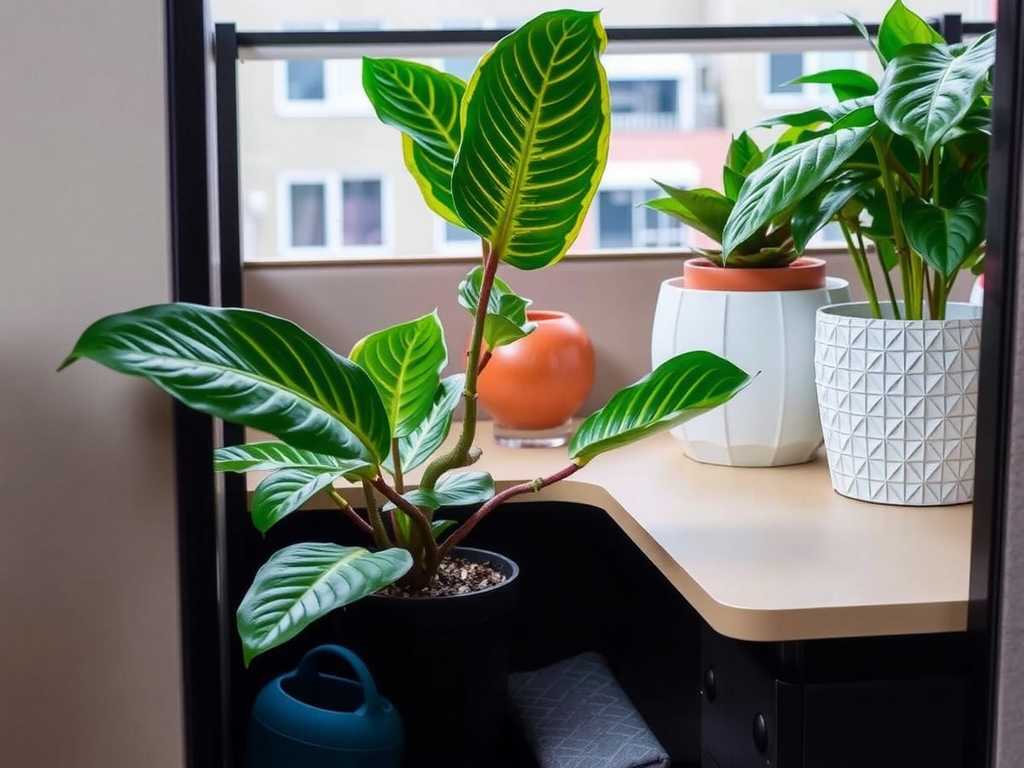
My leaves are still brown at the tips even with higher humidity. What should I do? The existing brown, crispy tips will not turn green again. They are scar tissue. Your goal is to prevent new damage. You can carefully trim the brown edges with clean, sharp scissors, following the natural leaf shape, for aesthetic purposes. Focus on the health of the new growth, which is your true indicator of success.
I can’t use a humidifier at my desk due to office policy. What’s my best option? This is a common constraint. In this case, double down on the pebble tray and plant grouping methods. Use a larger tray and group three or more plants together. You can also try a cloche or a large, clear glass jar placed over the plant for a few hours during the driest part of the day (like over a weekend) to create a terrarium effect, but remove it periodically for air circulation.
How often should I fertilize my office Calathea? Less is more, especially in an artificial environment. I feed mine with a diluted, balanced liquid fertilizer at half-strength, but only during the active growing seasons of spring and summer, and no more than once a month. I avoid fertilizing completely in fall and winter when growth naturally slows. Over-fertilization can cause salt buildup in the soil and leaf burn, mimicking humidity problems.
Saving a Calathea Ornata in an air-conditioned office is a testament to understanding its core needs. It’s not about constant, perfect conditions, but about creating a stable, supportive microclimate. The journey from a struggling plant to a thriving one required observation, a few simple tools, and a consistent routine. By focusing on humidity first—through measurement, community, and targeted moisture—you can enjoy the serene, beautiful presence of a healthy Calathea Ornata, even in the most challenging cubicle environment. Its daily prayer movement will become a rewarding sign that you’ve successfully brought a slice of the tropics to your desk.
发表评论