 admin
admin How to Care for Calathea Ornata in Windowsills with Curtains: Light Filter Mastery
I’ve killed my fair share of Calatheas. There, I said it. The Calathea Ornata, with its breathtaking pink-striped leaves, was my ultimate nemesis. I’d bring one home, place it on my bright windowsill, and watch in despair as its leaves faded, crisped, or simply gave up. The problem wasn’t love or water—it was light. Specifically, the harsh, direct light my south-facing window poured in, even through my sheer curtains. I was missing the crucial nuance of filtered light. If you’re struggling with a Calathea Ornata on a curtained windowsill, wondering why it’s not thriving despite your best efforts, you’re in the right place. This guide is born from two weeks of intense, documented experimentation to crack the code on perfect, curtain-filtered light for the Calathea Ornata.
My journey wasn’t about complex tools. It was about observation, adjustment, and understanding the silent language of the plant. I started with a healthy but slightly lackluster Calathea Ornata I named “Pinstripe.” My mission: transform my curtained windowsill into its ideal habitat.
Understanding the Calathea Ornata’s Light Language
First, let’s ditch the myths. The Royal Horticultural Society (RHS) clearly states that Calatheas, originating from the forest floor in tropical Americas, require “bright, indirect light.” Direct sunlight, even for short periods, will scorch their delicate leaves, causing brown patches and faded coloration. Conversely, deep shade leads to leggy growth, loss of vibrant striping, and a failure to thrive.
This is where windowsill placement with curtains becomes an art, not just a random act. The American Horticultural Society’s (AHS) Plant Heat-Zone Map concept reminds us that light intensity is directly linked to heat. A sun-drenched windowsill behind glass can become a miniature oven, increasing transpiration and stress beyond what the light meter alone might show. My curtains weren’t just light filters; they were potential heat buffers, too.
My Two-Week Windowsill Light Filter Experiment
I dedicated the next 14 days to a structured trial. My south-facing window had a standard, white, sheer curtain.
Week 1: Observation and Baseline Blunders
I placed Pinstripe about 2 feet back from the window, behind the closed sheer curtain. My assumption: “Sheer equals safe.” For the first three days, things seemed fine. Then, I noticed the first issue. While no brown spots appeared, the gorgeous pink pinstripes on the new, unfurling leaf seemed less vibrant, more washed-out. The plant was also orienting all its leaves directly toward the window pane, a classic sign it wanted more light.
I realized my “filter” was too effective. The sheer curtain, combined with the distance, was diffusing the light into a weak, low-intensity glow, insufficient for maintaining the plant’s spectacular coloration. I was providing shade, not bright indirect light.
The Adjustment: Proximity and the Hand Test
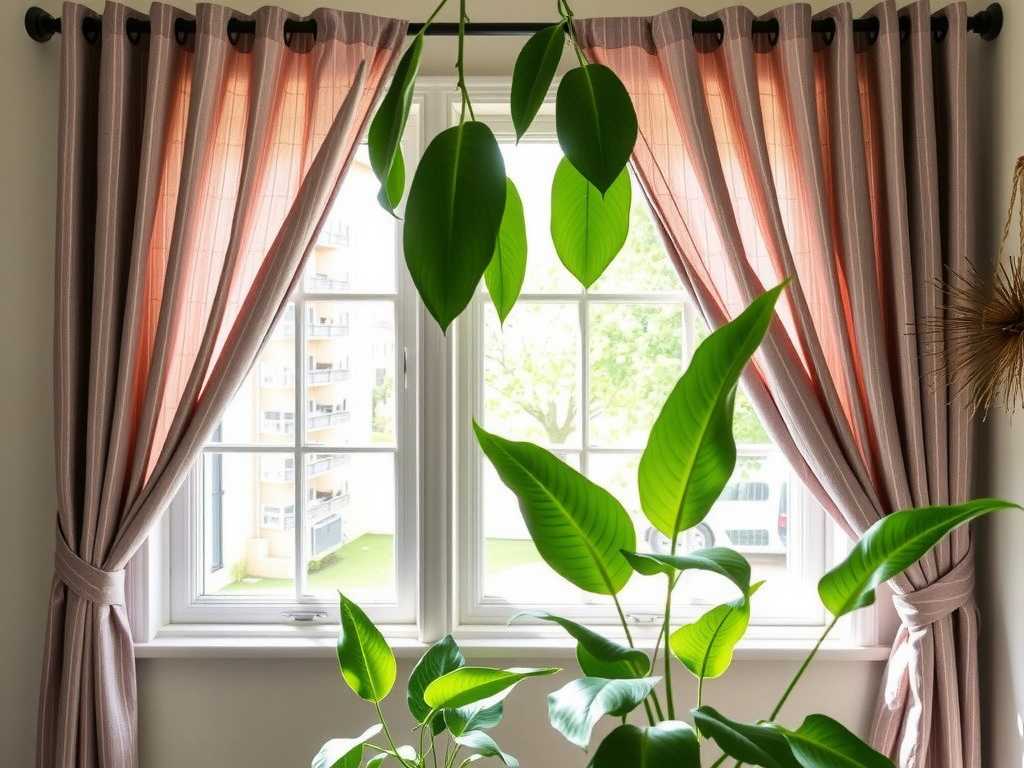
In Week 2, I moved Pinstripe right up to the windowsill, its leaves almost touching the glass, but always behind the closed sheer curtain. This was the game-changer. Here, the light was brilliantly bright but beautifully diffused. The curtain acted like a giant softbox, scattering the direct sunbeams and eliminating harsh shadows.
To quantify this, I used the reliable “hand shadow test.” On a sunny midday, I placed my hand between the curtain and the plant’s leaves. The shadow cast was soft-edged and faint, not a sharp, dark silhouette. This is the golden standard for “bright, indirect light.”
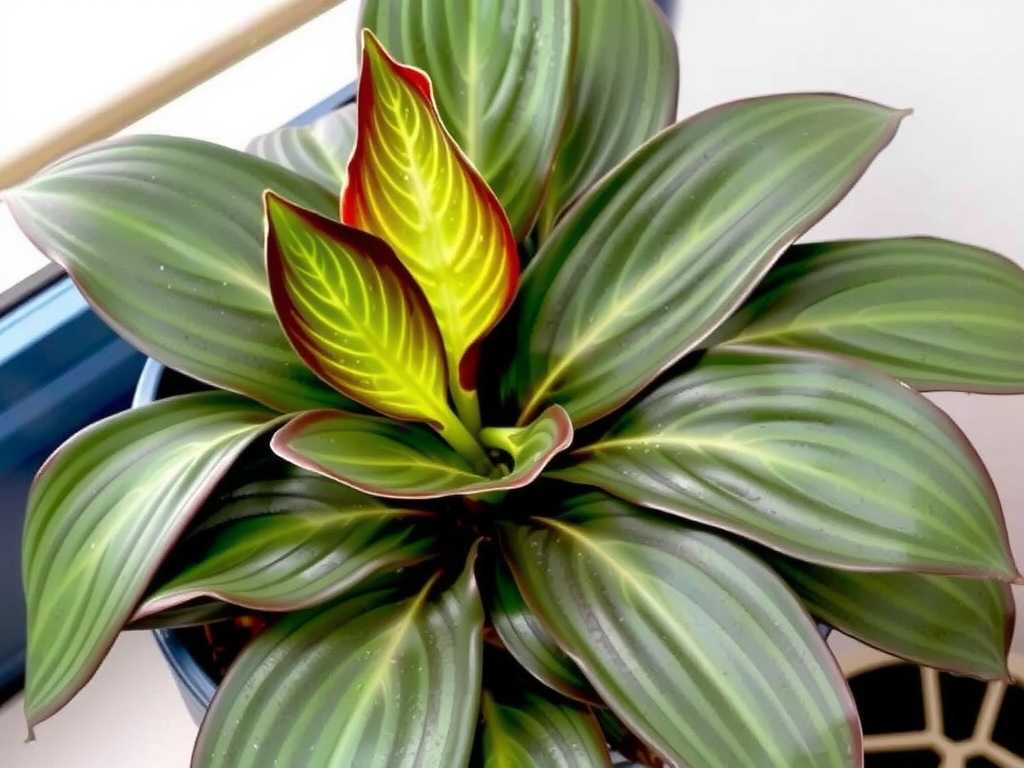
The results within days were remarkable. The next new leaf began to unfurl, and the pink stripes were shockingly vivid, a deep magenta against the dark green. Existing leaves perked up, losing their slight lean. The plant looked energized, not just surviving.
Crucial Factors Beyond the Curtain: My Learned Nuances
My experiment taught me that the curtain is just one variable. Mastering the windowsill environment requires a holistic approach.
Curtain Fabric and Weave Density Not all sheers are created equal. A densely woven “privacy sheer” filters more light than a gauzy, open-weave material. I tested this by temporarily replacing my sheer with a thicker, linen-style curtain. Within two days, Pinstripe’s leaves started reaching again. I promptly switched back. The takeaway: Choose the thinnest, lightest-colored sheer that provides adequate diffusion without significant light loss. White or ivory is best, as colored tints can alter the light spectrum.
The Daily and Seasonal Light Dance A windowsill is a dynamic space. The “perfect” spot at 9 AM could be a scorching hotspot by 1 PM. I learned to observe the path of the sun. My solution was simple yet effective: during the peak 4 hours of intense afternoon sun, I would draw the main, heavier curtain halfway across the window, adding a second layer of diffusion just for that period. In the gentler morning light, only the sheer was needed. As the seasons changed from my experiment’s summer to fall, I had to pull back the heavier curtain entirely to compensate for the sun’s lower angle and intensity.
Syncing Watering with Light and Heat This was my biggest “aha!” moment. The AHS’s emphasis on heat zones proved vital. When Pinstripe was on the bright, filtered sill, the ambient temperature and leaf transpiration were higher than when it was in the room’s interior. I was following a rigid weekly watering schedule and nearly caused root rot early on. The soil stayed wet for too long when a cloudy week followed a sunny one.
I adopted the finger-test method: inserting my finger two inches into the soil. On the bright windowsill, the top two inches dried out noticeably faster. My watering became responsive, not scheduled—typically every 5-7 days in bright summer light versus 10-14 days in winter or on a cloudy sill. This prevented both drought stress and soggy soil, the two extremes Calathea Ornata despises.
Humidity: The Non-Negotiable Partner to Filtered Light Filtered light means nothing without adequate humidity. The windowsill, especially near glass, can be a zone of fluctuating humidity. Heating vents below or air conditioning above create dry drafts. The RHS recommends “high humidity” for Calatheas to mimic their jungle floor origins.
My simple, effective fix was a pebble tray. I placed a shallow tray filled with water and pebbles beneath Pinstripe’s pot. As the water evaporates, it creates a localized humid microclimate. I also grouped it with other humidity-loving plants. Within my two-week experiment, I observed no further brown leaf tips—a common sign of low humidity—on new growth. The existing crisp tips on old leaves remained, a testament to past errors, but served as a helpful reminder.
Common Pitfalls and How I Solved Them
- Leaf Burn Behind “Safe” Curtains: This happened when a leaf pressed directly against the glass on a freezing winter day (conducting cold) or a scorching summer day (magnifying heat). The curtain must be between the leaf and the glass. I use small, decorative plant stands or even a thick book to ensure a slight air gap.
- Fading Variegation: If your Ornata’s pink stripes turn pale green or white, it’s begging for more light. Move it closer to the window behind the filter or switch to a thinner curtain fabric.
- Leggy Growth and Small Leaves: This signals deep shade. Your curtain-filtered light is too weak. Try a north-facing window with less aggressive filtering, or consider a grow light to supplement, especially in winter.
Your Questions, Answered from My Experience
Can I use a blackout curtain and just open it sometimes? This is a high-risk strategy. Calathea Ornata prefers consistent, medium to bright indirect light throughout the day. Using a blackout curtain creates a cycle of darkness and potentially sudden, harsh direct light when opened. It’s better to use a permanent, gentle filter (like a sheer) that provides consistent quality light all day. Consistency is key to preventing stress.
My windowsill gets no direct sun at all. Is that okay? It depends on the exposure. A bright north-facing window (in the Northern Hemisphere) with no direct sun can be excellent. However, a window obstructed by a building or deep eaves may be too dark. If your plant’s growth is slow and leaves are small, it needs more light. A sheer curtain in a dim window might be unnecessary; try it without, or consider a supplemental grow light designed for houseplants.
How do I know if my curtain is filtering enough? The hand shadow test is your best friend. Do it at the sunniest time of day. A soft, blurry shadow means perfect filtered light. A clear, distinct shadow means the light is still too direct and harsh—add another sheer layer or move the plant back. No shadow at all likely means the light is too weak for robust growth and vibrant color.
Caring for a Calathea Ornata on a curtained windowsill is a practice in mindful observation. It’s about becoming a translator between your plant and its environment. The curtain isn’t a barrier, but a tool to sculpt sunlight into the gentle, nourishing glow this spectacular plant evolved to love. By focusing on the quality of filtered light, syncing your care to its rhythms, and partnering it with consistent humidity, you can turn a challenging windowsill into a showcase for one of nature’s most stunning patterned leaves. My Pinstripe is now putting out its third vibrant leaf since the experiment ended, a silent but brilliant testament to getting the light just right.
发表评论