 admin
admin How to Fix Slow Leaf Growth in Calathea Ornata: A Complete Nutrient Check Guide
There's a special kind of frustration that comes with caring for a Calathea Ornata. You provide the filtered water, the humidifier hums faithfully, the light is just right—yet, your plant seems stuck. New leaves are painfully slow to unfurl, or worse, they emerge small and lackluster. If this sounds familiar, you're not alone. For weeks, I stared at my own "Pinstripe" plant, wondering what secret ingredient I was missing. I finally discovered that the issue often lies beneath the surface: a subtle but critical nutrient imbalance. This guide is the result of my two-week deep dive into a systematic nutrient check for Calathea Ornata, a process that finally unlocked the vibrant growth I was desperate to see.
Forget complex chemistry; think of plant nutrients as a balanced diet. A deficiency or excess can directly stunt leaf development. The Royal Horticultural Society (RHS) notes that while Calatheas aren't heavy feeders, they require a consistent supply of essential micronutrients, like magnesium and iron, for their signature large, patterned leaves. My mission became clear: to diagnose and correct this through a methodical, observant process.
Understanding the Nutrient-Growth Connection in Calatheas
Before diving into solutions, it's crucial to understand why nutrients are so pivotal for leaf growth. Leaves are manufacturing centers, built from nutrients drawn up through the roots. Nitrogen (N) is fundamental for the green chlorophyll and overall leaf size. Potassium (K) regulates the internal processes that move water and sugars, essential for pushing out new growth. Micronutrients like iron are non-negotiable for chlorophyll synthesis, and magnesium sits at the heart of the chlorophyll molecule itself.
When any of these is lacking, the plant's energy for creating new, healthy leaves plummets. It may survive, but it certainly won't thrive. The American Horticultural Society (AHS) emphasizes that symptoms like slow growth and chlorosis (yellowing between veins) are classic distress signals, often pointing directly to nutritional issues.
My Step-by-Step, Two-Week Nutrient Audit and Correction Protocol
This wasn't a quick fix but a careful investigation. I committed to a two-week observation window to see real changes.
Week 1: The Diagnosis Phase
First, I ruled out the obvious culprits. I double-checked that my plant wasn't rootbound, that its humidity was consistently above 60%, and that it received no direct sunlight. With environment confirmed, I moved to the soil.
I started with a simple soil pH test. Calatheas prefer slightly acidic soil (pH 5.5-6.5). My test revealed a pH edging toward neutral (7.0). This was my first "aha!" moment. As the AHS explains, even if nutrients are present in the soil or fertilizer, an incorrect pH can lock them up, making them unavailable to the plant's roots. My Calathea could have been sitting in a nutrient prison.
Next, I audited my fertilization history. I had been using a standard, balanced houseplant fertilizer (20-20-20) but diluting it heavily and applying it infrequently, fearing fertilizer burn. In hindsight, this was likely providing inconsistent bursts of primary nutrients but failing to maintain a steady supply of micronutrients. The slow, small leaf growth was a telltale sign.
The Correction: Adjusting pH and Choosing the Right Fertilizer
Based on my diagnosis, I executed a two-part correction.
- pH Adjustment: To gently lower the soil pH, I watered my Calathea with a solution of distilled water mixed with a tiny amount of white vinegar (one teaspoon per gallon). This is a temporary, careful fix. For a long-term solution, repotting with a fresh, peat-based potting mix (which is naturally acidic) is recommended after the growing season.
- Fertilizer Switch: I stopped my old fertilizer. I switched to a liquid fertilizer formulated for foliage plants, with a slightly higher nitrogen ratio and, crucially, one that included chelated iron, magnesium, and manganese in its ingredient list. I diluted it to half the recommended strength on the bottle.
Application and Initial Observation: I applied this pH-adjusted water with the weak fertilizer solution once, thoroughly soaking the soil until water drained freely. Then, I placed the plant back in its ideal spot. For the first 3-4 days, I saw no change—this was expected. The plant needed time to absorb and utilize the newly available nutrients.
Week 2: The Observation and Adjustment Phase
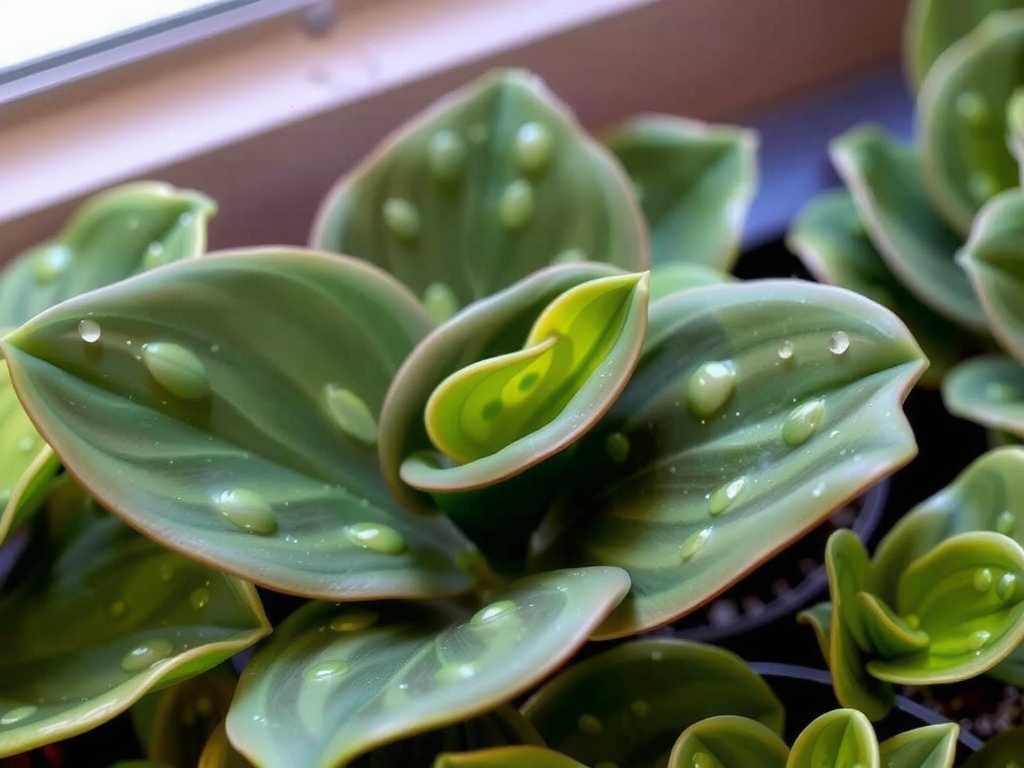
Around Day 7, I noticed a subtle change. The existing leaves seemed to have a deeper, richer green sheen. The most exciting sign appeared at the base: the tight sheath containing a developing leaf, which had been static for weeks, appeared slightly plumper and taller.
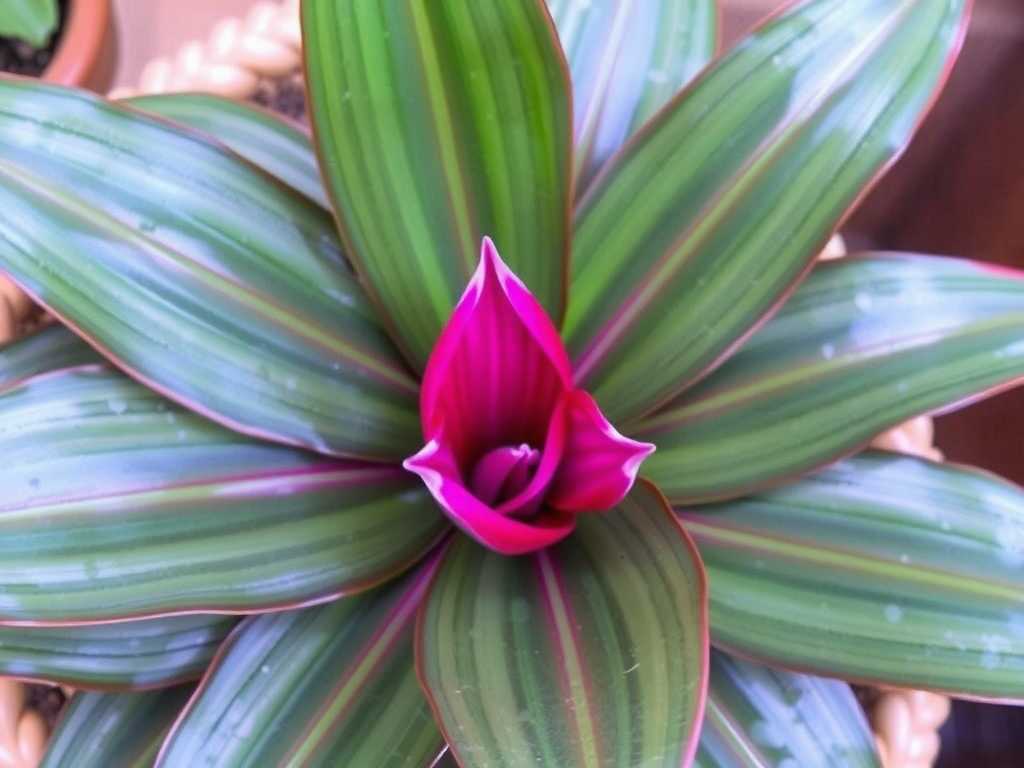
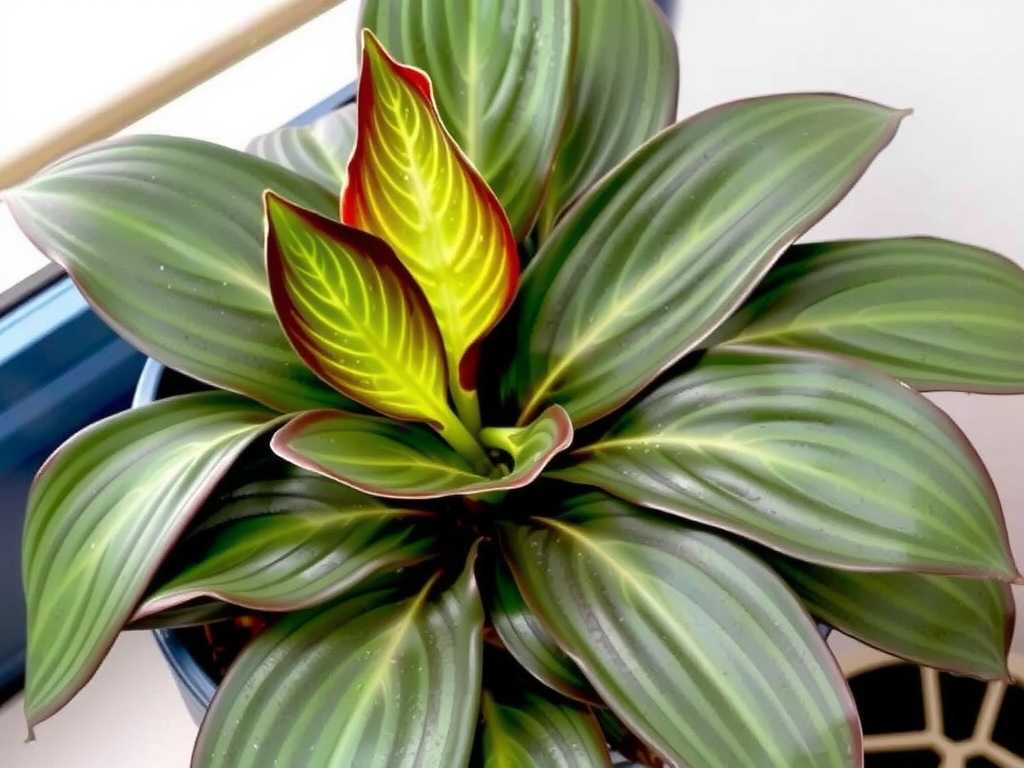
By Day 10, the new leaf had clearly begun its journey, unfurling at a pace I hadn't witnessed in months. It wasn't just faster; the emerging leaf showed intense, crisp pink stripes against a deep green background, a sign of good health.
However, I encountered a minor "踩过的坑" (pitfall). A small brown tip appeared on one older leaf. I immediately diagnosed this as a slight sensitivity to the fertilizer salts, even at a half dose. My solution was simple: on the next scheduled watering (Day 14), I used only plain, distilled water to flush any potential salt buildup from the soil. This prevented further tip burn and reassured me that I was feeding safely.
Key Nutrients to Check and Their Role in Leaf Development
My experience highlighted three key players:
- Nitrogen (N): The engine of leafy growth. Deficiency leads to pale, slow-growing leaves.
- Magnesium (Mg): Central to chlorophyll. Deficiency causes yellowing between leaf veins while veins stay green.
- Iron (Fe): Essential for chlorophyll formation. Deficiency presents as young leaves turning yellow with green veins.
Using a fertilizer that addresses this specific nutrient balance for Calathea is more effective than a generic one. Look for formulations that list these micronutrients on the label.
Integrating Nutrient Care into Your Overall Calathea Routine
A nutrient check isn't a one-off event. It's part of a holistic care strategy. Always water with filtered or distilled water to prevent chemical buildup. Ensure bright, indirect light to power the photosynthesis that uses these nutrients. Maintain high humidity so the plant can focus its energy on growth rather than moisture stress. When these elements align with proper nutrition, your Calathea Ornata will reward you with consistently spectacular leaf growth.
Frequently Asked Questions
Can I use regular garden fertilizer on my Calathea Ornata? I strongly advise against it. Garden fertilizers are often too strong and not formulated for the delicate root systems and specific micronutrient needs of potted tropical plants like Calathea. Always opt for a gentle, liquid houseplant fertilizer.
How often should I fertilize my Calathea to maintain good growth? During the active growing season (spring and summer), I now fertilize every 4 weeks with a half-strength diluted liquid fertilizer. I completely stop fertilizing in fall and winter when growth naturally slows. This prevents salt buildup and aligns with the plant's natural cycle.
My plant's leaves are developing brown edges even though I'm fertilizing. What's wrong? This was the pitfall I experienced. Brown edges often indicate fertilizer burn or salt accumulation in the soil, not a deficiency. It means the concentration is too high or you're fertilizing too often. Flush the soil thoroughly with distilled water and suspend fertilization for 8 weeks. When you resume, dilute your fertilizer even more.
发表评论