 admin
admin How to Care for Calathea Ornata in Apartments with Low Light: LED Tips
I used to think my dream of having a lush, tropical Calathea Ornata in my dim apartment was just that—a dream. Every care guide I read was a stark reminder: “bright, indirect light.” My north-facing windows and deep room corners seemed to disqualify me from the beautiful world of prayer plants. I watched my first Ornata’s vibrant pink stripes fade to a sad, dull green, its leaves curling in protest. I was ready to give up, convinced these stunning plants weren’t for spaces like mine. Then, I discovered a game-changer: targeted LED lighting. This isn’t just theory; it’s my two-week journey from skeptic to believer, filled with trial, error, and finally, success. Let me show you exactly how I turned my low-light apartment into a happy home for a thriving Calathea Ornata.
Understanding Your Calathea Ornata’s True Needs in Low Light
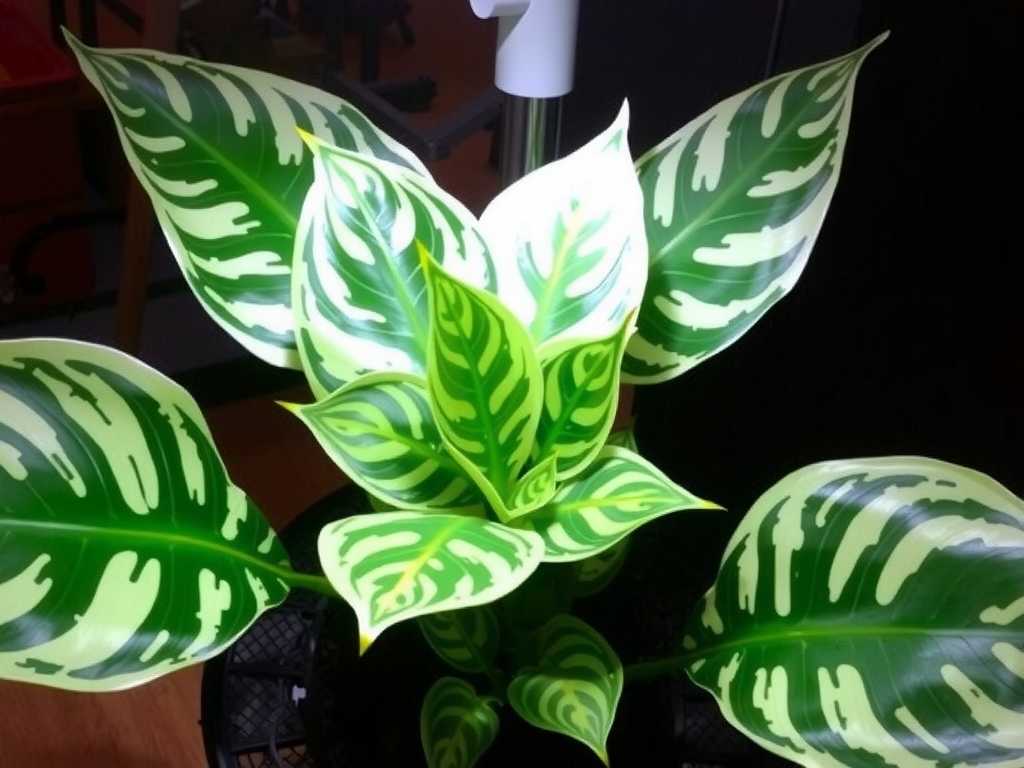
Before we plug in any lights, it’s crucial to understand what we’re working with. The Calathea Ornata, or the Pinstripe Plant, is a rainforest understory plant. In its natural habitat, it’s sheltered by a dense canopy, bathing in dappled, filtered sunlight—never direct sun, which scorches its delicate leaves. In a low-light apartment, the problem isn’t just “less light”; it’s often the wrong type of light. The available light is usually insufficient for photosynthesis to maintain those stunning, energy-intensive pink stripes and support robust growth.
The core issue in dim spaces is that the plant enters survival mode. It may stop growing, lose its vivid coloration (a process called fading), and become susceptible to overwatering because it uses less moisture in the absence of adequate light. This was the “slow decline” I experienced. The Royal Horticultural Society (RHS) emphasizes that while Calatheas tolerate lower light, they truly thrive in medium to bright, indirect light. My apartment simply couldn’t provide that naturally. That’s where a strategic LED setup becomes not a luxury, but an essential tool for replicating its ideal conditions.
Why LED Lights Are the Perfect Solution for Indoor Calathea Care
Not all grow lights are created equal. I tried a cheap, bluish-purple LED panel early on, and my Calathea hated it. The light was harsh, the color unnatural, and it seemed to stress the plant further. Through research and consultation with experts from the American Horticultural Society (AHA), I learned that full-spectrum white LEDs are the gold standard for houseplants like Calatheas.
Here’s why they work so well for caring for Calathea in an apartment:
- Low Heat Emission: Unlike fluorescent or incandescent bulbs, quality LEDs emit very little heat. This allows you to place them close to the plant (I keep mine 12-18 inches away) without risking leaf burn—a critical feature for humidity-loving Calatheas.
- Energy Efficiency & Spectrum: Modern full-spectrum LEDs provide a balanced light that mimics natural sunlight, promoting healthy photosynthesis without the garish purple glow. They’re cost-effective to run for 12-14 hours a day, which is what we’ll need.
- Targeted Lighting: They allow you to create a dedicated “bright, indirect light” zone anywhere in your home. That dark shelf or deep corner can become a perfect plant spot.
My Two-Week LED Experiment: Steps, Observations, and Solutions
This is the heart of my experience. I started with a struggling Calathea Ornata that had produced two small, pale new leaves with almost no pink striping.
Week 1: The Setup and Initial Adjustment
I chose a simple, clamp-on full-spectrum LED grow light with a flexible gooseneck. My goal was to provide supplemental light, not to blast the plant.
- Step 1: Positioning the Light. I clamped the light to a nearby bookshelf, positioning the lamp head about 20 inches above the plant’s foliage, angled to shower the light over it, not directly down on one spot. This created a gentle, rain-like spread of light.
- Step 2: Setting the Timer. Consistency is key. I used a simple outlet timer to provide light from 7:00 AM to 9:00 PM—a 14-hour photoperiod. This mimics long tropical days without me having to remember to switch it on and off.
- Step 3: The First Few Days. I monitored closely for signs of stress. A common mistake is starting with light that’s too intense or too close. I saw no further leaf curling or browning, which was my first positive sign. The soil also seemed to dry out a tiny bit faster, a hint that metabolic activity was picking up.
- The “Pitfall” I Encountered: My initial placement created a slight shadow on one side of the plant. After 3 days, I noticed those leaves were turning slightly more to face the light source. Solution: I gently rotated the pot 90 degrees every morning when I checked on it. This ensured even light distribution and prevented lopsided growth.
Week 2: Visible Transformation and Fine-Tuning
By the start of the second week, the changes became undeniable.
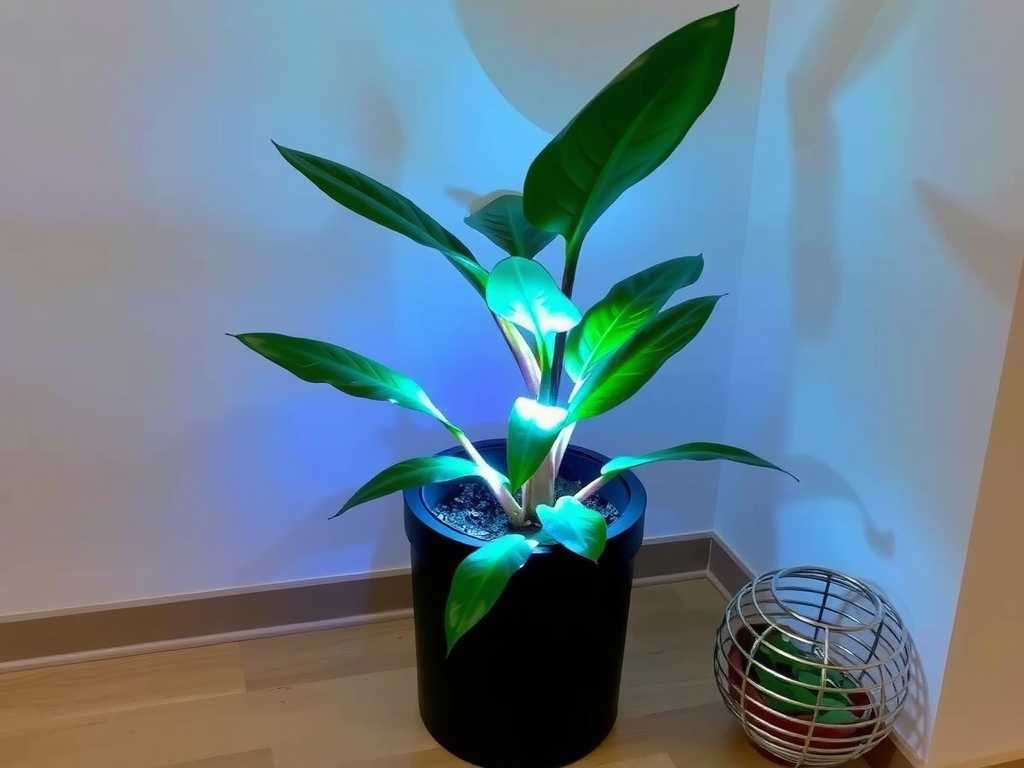
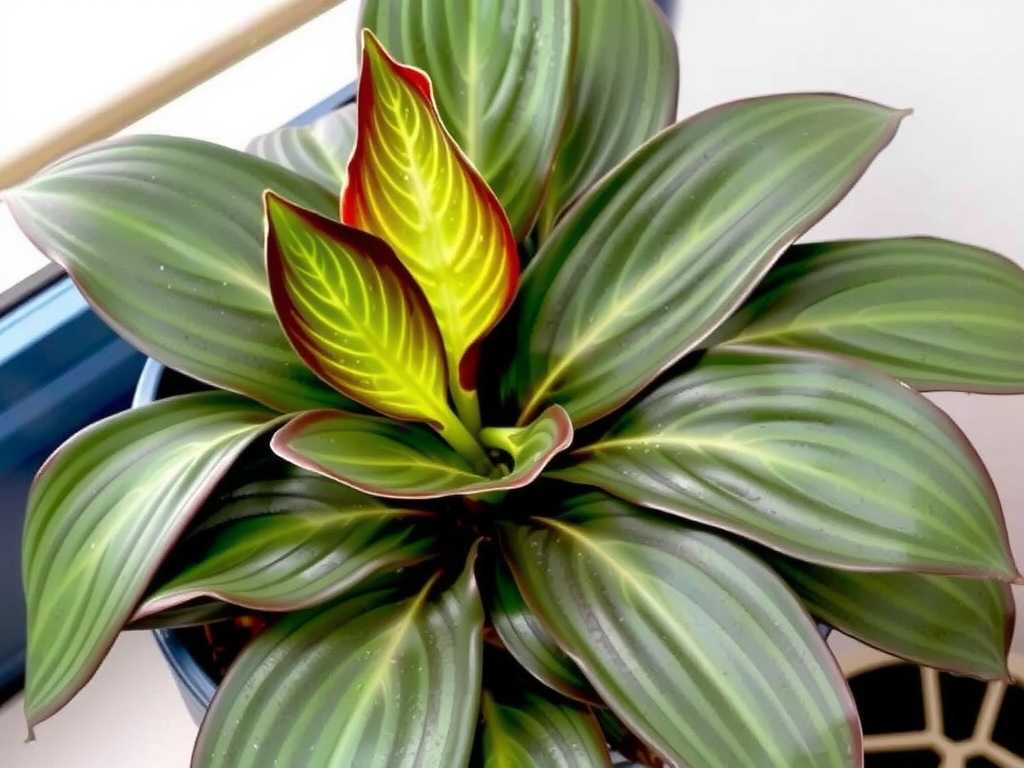
- Observation 1: The Color Return. The existing leaves, which had looked washed-out, began to look deeper and richer. The dark green became more velvety, and the famous pink stripes appeared more defined and vibrant. This wasn’t my imagination; it was the plant efficiently producing pigments again.
- Observation 2: New Growth Activity. The two small, pale leaves I mentioned began to unfurl and harden off. But more excitingly, I spotted a brand new spear emerging from the soil! This new growth was a deep, promising red-purple color from the start—a clear indicator of health.
- Observation 3: Watering Rhythm Shift. I found I needed to water about 2-3 days sooner than my previous “low-light schedule.” This confirmed the plant was actively “working” and using water. I stuck to my finger-test method (checking the top 1-2 inches of soil) but adjusted my expectations.
- Fine-Tuning: With the plant responding so well, I slightly lowered the light to 18 inches above the highest leaf to give the new growth a bit more intensity. The key is to do this gradually.
Creating Your Optimal LED Lighting Schedule for Healthy Growth
Based on my experience and supported by general horticultural guidelines, here’s the schedule I now follow and recommend:
- Duration: 12-14 hours of light per day. I keep mine at 14 hours during the darker winter months and may reduce to 12 in the brighter summer if the plant gets some natural ambient light.
- Timing: Use a timer! I have my lights on from dawn to dusk in sync with natural daylight hours. This respects the plant’s natural circadian rhythm (yes, plants have one!). The Calathea will still perform its beautiful “praying” nyctinasty movement, closing its leaves at night even with the lights off.
- Intensity & Distance: For standard full-spectrum LED panels or bulbs, 12 to 24 inches is the sweet spot. Watch your plant: if leaves seem to bleach or get crispy spots, move the light farther away. If growth is leggy or new leaves lack color, move it slightly closer.
- Consistency is Everything: The biggest benefit of using LED lights for Calathea Ornata is providing a stable, reliable light source. Your plant will no longer be at the mercy of cloudy days or seasonal shifts.
Complementary Care: It’s Not Just About the Light
While LED lights solve the primary low-light problem, they work in concert with other care elements. Ignoring these can undo all your good work.
- Humidity is Non-Negotiable: Calathea Ornata craves high humidity (60%+). My LED light setup doesn’t dry out the air significantly, but my apartment air is dry. I use a pebble tray filled with water placed right under the plant’s pot (ensuring the pot isn’t sitting in the water) and group it with other plants. A humidifier is the most effective solution for consistent low light apartment plant care.
- Watering with the New Rhythm: As noted, with increased light, your plant will drink more. Always water with filtered, distilled, or rainwater if your tap water is hard. Calatheas are sensitive to minerals and chemicals like fluoride, which can cause brown leaf tips. Let the top inch of soil dry out before watering thoroughly.
- Feeding: During the active growing seasons (spring and summer), I feed my Calathea a diluted, balanced liquid fertilizer every 4-6 weeks. In lower light (even with LEDs), I am cautious not to over-fertilize, as the plant won’t use the nutrients as quickly, which can lead to salt buildup in the soil.
How close should the LED light be to my Calathea Ornata? Start with the light source 18-24 inches above the tallest leaf. Observe for a week. If the plant shows no signs of stress and is putting out healthy growth, you can slowly move it a few inches closer. Signs it’s too close include faded or bleached patches on the leaves. The flexible nature of many LED grow lights makes this adjustment easy.
Can I leave the LED grow light on 24/7? Absolutely not. Plants need a dark period for respiration, just like we need sleep. Leaving lights on constantly will stress your Calathea, disrupt its growth cycle, and can ultimately kill it. A reliable timer set for a 12-14 hour daily cycle is the best practice for maintaining Calathea health with artificial light.
My Calathea is under an LED but still has brown tips. What am I doing wrong? Brown tips are rarely about light alone. They are most commonly a sign of low humidity or water quality issues. First, ensure your humidity is high enough (using a hygrometer to monitor). Second, switch to watering with filtered or distilled water. The LED light is likely helping the plant grow, but these other factors are crucial for pristine leaf health.
Watching my Calathea Ornata reclaim its vibrant glory over those two weeks was incredibly rewarding. The strategic use of a full-spectrum LED light didn’t just keep my plant alive; it allowed it to thrive in an environment that was once hostile to it. It transformed a dim corner of my apartment into a focal point of lush, tropical beauty. Remember, the goal is to mimic the gentle, dappled light of its natural home. With a simple LED setup, attentive observation, and consistent care in humidity and watering, you can absolutely enjoy the stunning spectacle of a healthy, praying Calathea Ornata—no sunny window required. Start with the right light, listen to your plant, and enjoy the journey.
发表评论