 admin
admin How to Care for Calathea Ornata in Greenhouses with Fans: Airflow Tips
I love my Calathea Ornata, but I’ll be honest—moving it into my small hobby greenhouse was a stressful decision. I knew this stunning ‘Pinstripe’ plant craves high humidity, which a greenhouse readily provides. However, I also knew its fatal flaw: it despises stagnant, soggy air almost as much as it hates being dry. The common advice is to “provide good airflow,” but what does that actually mean when you have fans running in a confined, humid space? How do you balance airflow to prevent fungal issues without desiccating those gorgeous, prayerful leaves? This was my core struggle. After extensive trial, error, and a dedicated two-week observation period, I’ve dialed in a system that keeps my Calathea Ornata thriving, not just surviving, in a fan-ventilated greenhouse.
My goal was to simulate the gentle, diffused air movement of its native understory, not create a wind tunnel. Getting this wrong meant crispy brown leaf edges, persistent mold on the soil surface, or both. Through this guide, I’ll share the precise steps I took, the mistakes I made along the way, and the airflow strategy that finally brought harmony to my greenhouse environment.

Understanding the Calathea Ornata’s Airflow Paradox
Calathea Ornata presents a unique challenge. According to the Royal Horticultural Society (RHS), plants in the Marantaceae family are particularly susceptible to leaf spot diseases in conditions of poor air circulation. Stagnant, humid air is a breeding ground for fungal pathogens. Conversely, the American Horticultural Society (AHS) notes that many tropical understory plants have adapted to very high humidity coupled with gentle air movement, and direct, harsh drafts can cause rapid moisture loss from leaves, leading to stress and browning.
This creates the paradox: we need airflow to prevent disease, but the wrong kind of airflow causes physical damage. The key is not just adding a fan, but engineering the right quality of airflow. For two weeks, I monitored my plant’s response to different setups, checking leaf texture, soil moisture evaporation rates, and any signs of distress daily.
My Step-by-Step Airflow Setup for Greenhouse Success
Here is the exact process I followed, incorporating the lessons from my initial missteps.
Choosing and Positioning Your Fans Correctly
My first mistake was using a single, powerful oscillating fan placed too close to the plant shelf. Within three days, the tips of the newest, unfurling leaf on my Calathea began to brown. The airflow was too direct and too strong.
The fix was a two-fan approach:
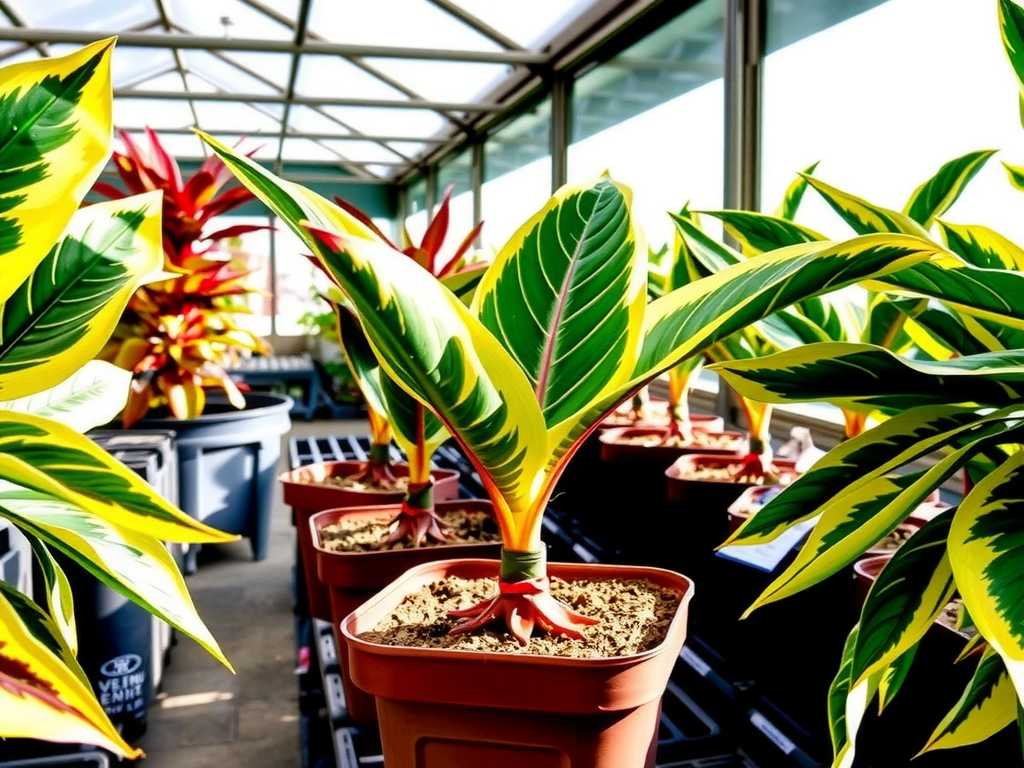
- A Small, Oscillating Fan at Ground Level: I placed a low-speed oscillating fan on the greenhouse floor, pointed slightly upward and away from direct plant contact. Its job isn’t to blow on plants but to circulate the air mass at the base, preventing cold, damp pockets from forming.
- A Ceiling-Mounted Circulation Fan: This was the game-changer. I installed a small, low-amp circulation fan (often called a greenhouse fan) near the peak of the greenhouse roof, angled to push air along the ceiling. This creates a gentle, circular convection current. Warm, humid air rises, gets moved along the ceiling, cools slightly, and descends on the opposite side of the space. This resulted in a barely perceptible, 360-degree air movement.
Calibrating Fan Run Times for Optimal Humidity
Running fans 24/7 in my small greenhouse dropped the humidity from a steady 75% to below 60%, causing my Calathea’s leaves to lose their supple feel. I needed intermittent operation.
I plugged both fans into a simple digital timer. Here’s the schedule I settled on after a week of adjustments:
- Daytime: Fans run for 15 minutes every two hours. This refreshes the air around the plants during peak photosynthetic activity without causing excessive drying.
- Nighttime: Fans run for 10 minutes every three hours. This is crucial for preventing condensation from settling on the leaves overnight, a prime condition for fungal diseases.
This schedule maintained my target humidity range of 65-75% while consistently disrupting stagnant air. After implementing this, the faint white mold that had begun to speckle the soil surface of my Calathea’s pot completely disappeared within four days.
Strategic Plant Placement Within the Airflow Pattern
Where you place your Calathea Ornata in relation to the airflow is critical. Do not place it in the direct path of any fan. My successful placement was on a mid-level shelf, roughly halfway between the floor and the ceiling, and several feet away from the downward arc of the ceiling fan’s airflow. I used a simple digital hygrometer to confirm the spot had stable humidity and could feel a faint, cool breeze when I held my hand up—what I call the “ghost of a breeze” test.
Supporting Practices for Healthy Airflow Management
Airflow doesn’t work in isolation. These supporting practices are non-negotiable.
Watering Adjustments for Active Air Movement Fans increase transpiration and soil surface evaporation. I found my Calathea needed watering about 20% more frequently than when it was in my still bathroom. However, the watering technique became even more important. I strictly water at the base, avoiding wetting the foliage, and only when the top inch of soil feels dry. This prevents water from sitting in the crown of the plant, where reduced airflow could cause rot.
Humidity Synergy: Trays and Grouping To counter the slight drying effect, I use a pebble tray and strategic grouping. The pebble tray provides localized humidity directly around my Calathea. Grouping it with other humidity-loving plants like ferns and Alocasias creates a beneficial microclimate of shared transpiration, which the gentle airflow then distributes evenly.
Monitoring and Adapting: The Two-Week Observation Log For 14 days, I kept a simple log:
- Day 1-3: (Single strong fan) Leaf tip browning observed. Humidity unstable.
- Day 4-7: (Dual-fan setup, constant run) Humidity too low (58%). Soil drying too fast. Leaf edges slightly curled.
- Day 8-10: (Dual-fan with timer schedule) Humidity stabilized at 70%. Soil mold receding. New leaf unfurling without browning.
- Day 11-14: (Optimal placement finalized) Plant appears robust. All leaves praying vigorously morning and night. No new signs of stress.
This log was invaluable. It moved me from guessing to knowing.
Common Challenges and My Solutions
Problem: Fine, white fungal growth on the soil surface. My Solution: This was my first red flag for stagnant air. I increased the frequency of the fan timer cycle by one extra period during the day and sprinkled a thin layer of cinnamon (a natural antifungal) on the soil. The airflow change was the permanent cure; the cinnamon helped in the short term.
Problem: Persistent brown, crispy edges despite good humidity. My Solution: This was direct draft damage. I relocated the plant immediately, using the “hand test” to find a quieter spot in the airflow pattern. I then trimmed the brown edges with sterile scissors, following the natural leaf shape for aesthetics.
Problem: Fans lowering overall greenhouse humidity too much. My Solution: I added a second pebble tray and placed a wide, shallow bowl of water near the heating element (in winter). This increased the surface area for evaporation to offset the fans’ effect without creating wet foliage.
Addressing Your Key Concerns
Can I use a regular household fan in my greenhouse? Yes, but with caution. Ensure it’s rated for humid environments (check for damp location ratings). Avoid high-speed settings. My oscillating fan is a basic household model, but my ceiling fan is specifically designed for greenhouse conditions, offering better moisture resistance and energy efficiency for long-term use.
How do I know if my airflow is too strong for my Calathea? Perform the “leaf test.” Gently hold a leaf of your Calathea. If it flutters or vibrates noticeably from the airflow, it’s too strong. You should barely feel any movement. Also, watch for excessive leaf curling or rapid browning of new growth, which are clear distress signals.
Is airflow more important than humidity for Calathea Ornata in a greenhouse? They are inseparable partners, not rivals. Think of it as “humid airflow.” The goal is constant, gentle movement of already humid air. Stagnant humid air causes disease; dry airflow causes desiccation. You must manage both in tandem. My system succeeds by adding gentle movement to a high-humidity environment, not by using airflow to replace humidity.
Finding the sweet spot for Calathea Ornata in a greenhouse with fans requires observation and patience. It’s not about creating a breeze, but about eliminating stagnation. By using indirect, circulating fans on a timer, carefully placing your plant, and supporting it with proper watering and humidity tactics, you can replicate the gentle, moist air movement of its natural habitat. The reward is a spectacularly healthy Calathea Ornata with deep, vibrant leaves that perform their daily prayer without a hint of stress—proof that even the most sensitive plants can flourish with a carefully crafted environment.
发表评论